Posts

Showing posts with the label history

Teaberry Top

Image
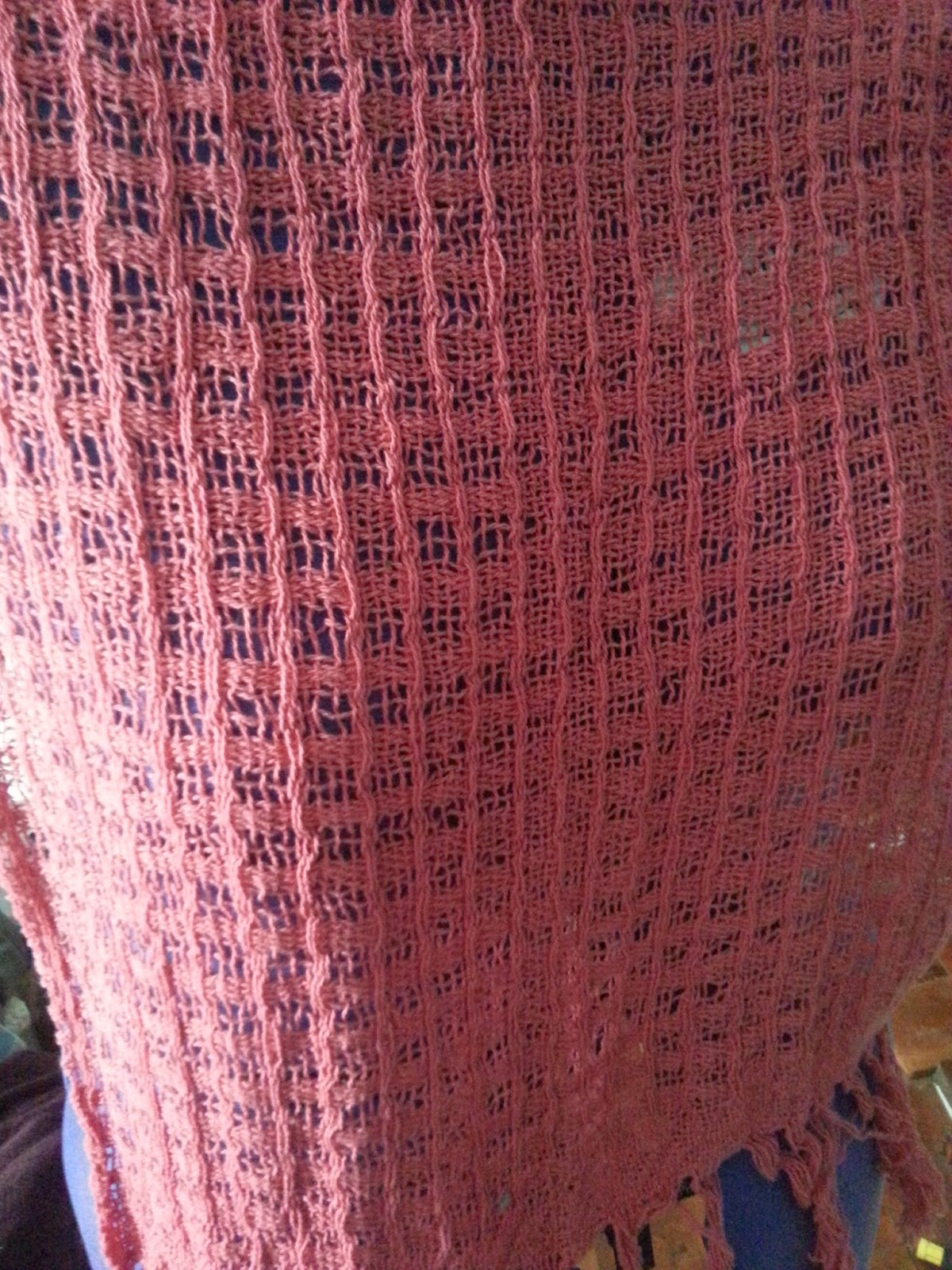
Two weeks ago, I warped up my loom with a new length of material. Weaving the lace at 10 dpi left an open and airy fabric, very lightweight and beautiful. As you can see, it is rather open, though not as much as I thought it would be. I have about six yards of material. Four of the pieces I wove off at shorter lengths, intending them to be made into a skirt later. What I hadn't expected was the shrinkage after washing the material. What was originally about twenty-four inches shrank to a little over eighteen inches. Yet, despite the surprises, I think this will wind up making beautiful garments. I think it would make a good summer top, or with a contrasting layer underneath, it would make a wonderful gown or skirt. I look forward to see what I can use this material for, and how it could be made with different materials.

Weaver's Information

Image
One of the things that I have found important in the last few months is a weaver's journal. Normally, I'm not one for keeping track of any of my projects, but even that is a bit of a misnomer. I keep track of projects, but not the immediate cloth. For the most part, I keep track of the project such as the one below: Black Iris Bag Keeping track of the fabric I wove for the project is a different matter, but that has changed as I developed more and more lengths of fabric. Some of my fabric works for ponchos or shrugs whereas other fabric works better for aprons or purses. It's in this new journal that I keep my information. In here, I keep track of samples, length, measurements before and after washing the fabric, as well as where I purchased the yarn, the type of yarn, and how much I used. All this information is necessary for me to repeat a process later. It also helps me keep notes on projects that didn't work as well as I hoped. Inside, I keep two s...

Weaving History - Cloth

Image
If you look at paintings from the time period, you rarely find clothes with any of these weaving patterns in them. The main reason was then, like now, people purchased their cloth from elsewhere. The people who could afford to hire a portraitist rarely made their clothes. Even the average housewife purchased cloth to make her family's clothing. Most likely, it was women on the frontiers who wove the cloth to make clothes, but even that was fairly rare.  The Average Community It has come down to us, through historical studies, films and books that women spent their time weaving. A more accurate image would have to include few women weaving. As far back as the sixteenth century, the British Isles had areas developing into weaving centers. By the time the late Eighteenth Century arrived, areas such as Ulster, Ireland, Wiltshire and Yorkshire in England were known as weaving centers. In fact, according to one book I read, the inhabitants of Colonial Pennsylvania grew flax ...

Weaving History - What's in a Name

Image
Twills are one of my favorite structures to weave. Granted, twill is a foundation for many other weaves including overshot. Today, I'm going to focus a little bit on twill names and patterns while exploring some of the historical weaves used during the Colonial and Early American Republic time period. Return Twill, Bird's Eye pattern Twills are a weave structure that passes the weft over two warp threads and under two warp threads creating a diagonal pattern on the fabric as seen below. In the photograph above, taken from my current project on the loom, you can see what is called a Bird's Eye pattern which is a type of returning twill. 2/2 Twill Pattern All right, for those of you who understand weaving set-ups you can skip a little bit, but for others who don't, continue reading. Weaving Set-ups To create patterns in a fabric, you have two elements to focus upon beyond color: heddle set-up as well as treadling the shafts to which the heddles are attache...

Weaving History - Space makes the Difference

Image
I focused last week on overshot coverlets as opposed to quilts. For a brief distinction a coverlet is woven, a quilt is not. Quilts and coverlets co-exist in equal appreciation during the Nineteenth Century, but as the Twentieth Century progressed, quilts became more popular and coverlets less popular. Part of the reason is simply the time  it takes to weave a coverlet let alone setting up the loom. To put this in perspective, it takes me roughly twelve hours from warping the loom to weaving the cloth to finishing off the edges for me to make the two scarves below. Both are around two yards in length. These scarves were done on my rigid heddle loom at a 7.5 dpi. What slowed them down was the pick-up stick pattern. On Helen the loom, I'm weaving at a sixteen dpi plus weaving a tighter weave so it takes longer. Take a look at the two projects below. First is the purple scarf from above before it is washed. Looking closely at it, you can tell that there is plenty of spac...

It's Alive

Image
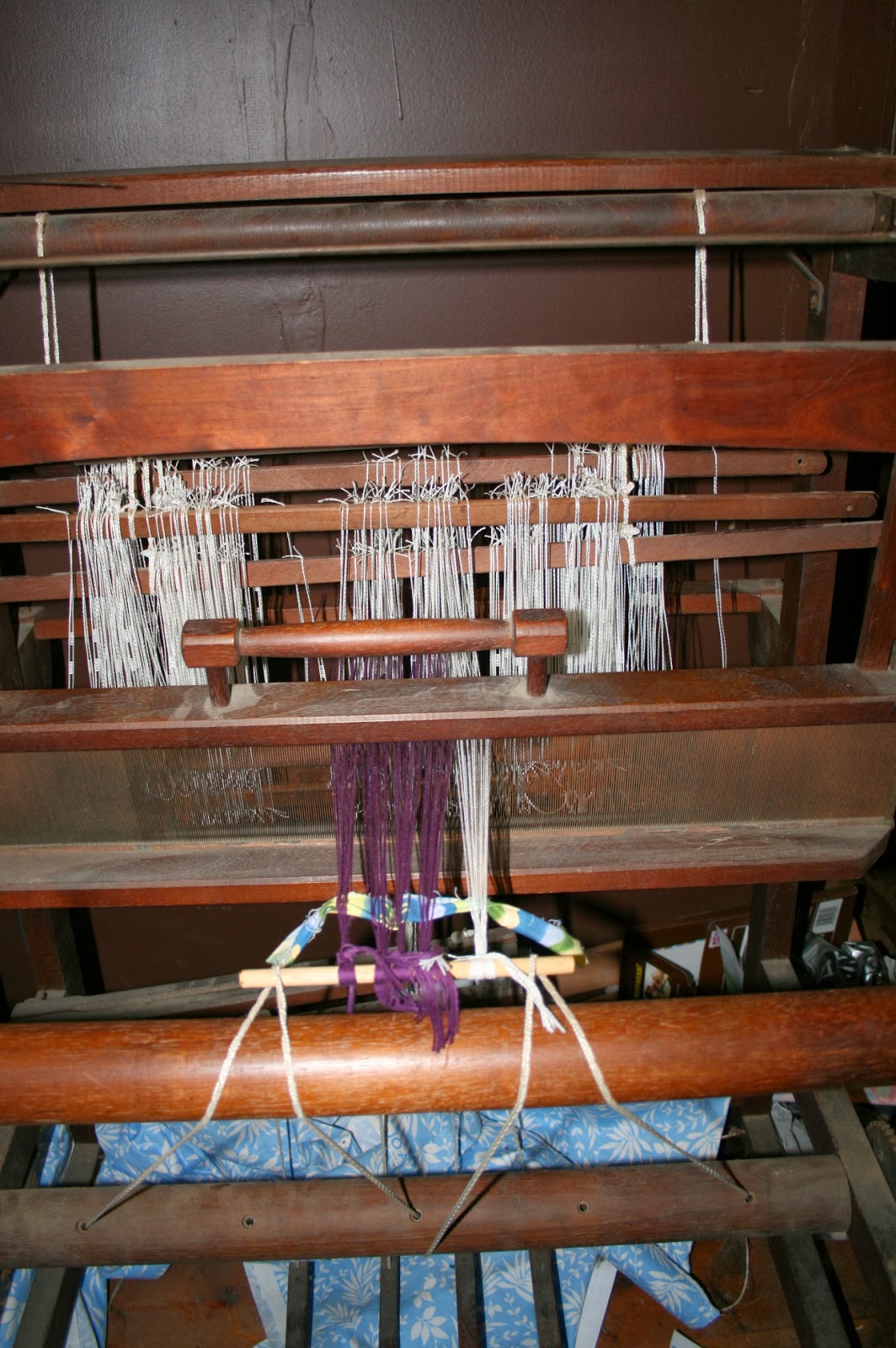
No, I haven't created a monster ... yet, but I've been arguing with my Grandmama's looms over the past ten years (she died in 2003, and I took over the looms a year later). They have been a trial, in every sense of the word, both good and bad. The Loom Called Helen For most of the past six months or so, this monster (above) has sat beside the studio door waiting. Yes, it does appear to be sticking out its tongue, and yes, that is how it behaves. It is, to say the least, ornery. On this loom, however, is an experiment in weaving. It's a simple pattern called bird's-eye which creates a beautiful pattern. The pattern is quite old, but very practical. Researching looms, how they work and are made, also plays into the books. Thankfully, the frustrations with the looms have provided first-hand accounts that might show up in a book. Grandmama's looms are called counter-balance looms which means to weave everything has to be balanced. Other types of looms includ...

Weaving History - Overshot Coverlets

Image
  Coverlets. What are coverlets, and what do they have to do with American history?  Good source book of American weaving history According to the National Museum of the American Coverlet , a coverlet is:  "[a] woven bedcovers, used as the topmost covering on a bed. The weaver worked on a loom to construct the textile itself one row at a time, and the pattern was woven in as part of the process." 1   Coverlets were predominately produced during the Eighteenth and  Nineteenth  centuries. Today, they are seen  traditionally  as Colonial pieces, and are often placed in colonial settings. The coverlets were used to cover beds as well as to provide extra layers of warmth.  Created from cotton and linen or cotton, these items are warm, sturdy articles heavy enough to keep away drafts. The coverlets also incorporated many beautiful woven designs including overshot, double weave and  Jacquard , the last providing many of the...

Weaving Heritage

Image
If you've read the blog for a little while, you'll have learned that in addition to weaving, I'm a writer under the pen name, Bridgette ni Brian. One of my great loves is combining weaving with writing, and usually it takes the form of story telling. I'm fortunate in my heritage, because my grandmother and great-grandmother both wove. I've inherited two of the looms they used, and somewhere in my parents' home is a photograph of Grandma weaving at the smaller loom. Close-up of loom Weaving, for me, is as a much about what I do now, as it is what my ancestors have done in the past. When I'm able to combine the heritage with story, life becomes interesting. Over the course of the next couple weeks, I'll be starting a trilogy about colonial weavers. What piqued the interest was an article about weavers on the Colonial Williamsburg's website ( here ) as well as my own research into weaving. Here at Bryony Studio, I'll focus on the actual ...

Tradition!

Image
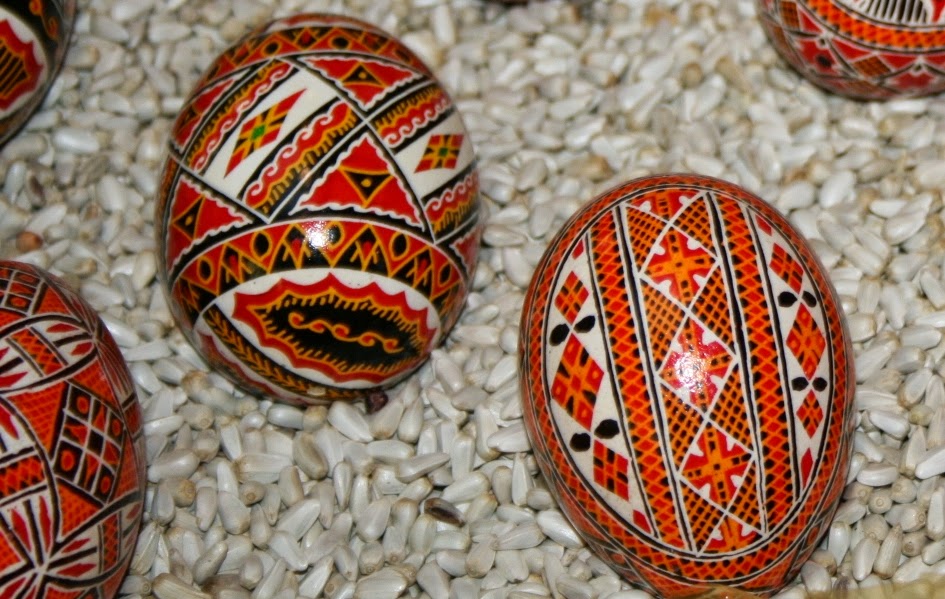
When I was little, I was jealous of friends of mine who had a strong ethnic heritage. Two of my friends were half Mexican; another set of friends were Korean, and still others were Italian Polish Easter Eggs at Broadway Market, Buffalo My family didn't have any traditions handed down from parents to children. We have British stock on both sides of my family, primarily English, but with Scottish and Irish thrown in for good measure. My mom provides German and Native American heritage, while my dad throws in some Dutch heritage. Other than knowing my family, I have no traditions attached to them. Do we celebrate St. Patrick's Day? No more than the average American does. Are there traditional Easter and Christmas celebrations unique to the Dutch, Germans or English? Probably. We wouldn't know. See, my family has lived in the United States for most of America's history. My grandma, who immigrated to the US in the 1920s, more than likely descended from Loyalists wh...

Handwoven Fashions

Image
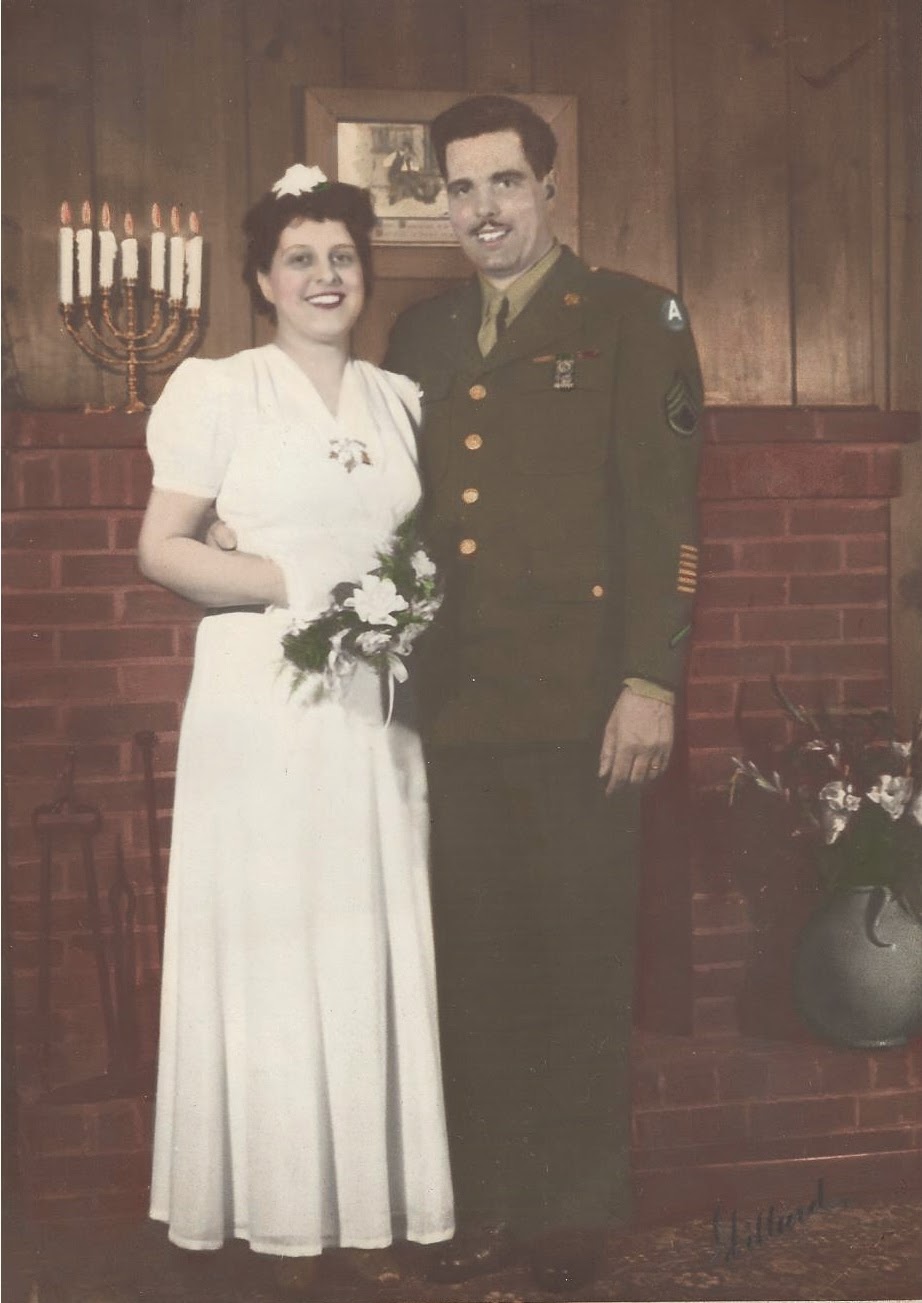
I have odd dreams. Always have; always will. I always picture myself doing these crazy things or having cool adventures ... must be a writer/artist thing. One of the dreams I want to do is to create  handwoven garments. This dream is part of the reason why I've started Bryony Studios. My inspiration comes from my family. 1945, Wedding Photo Don't my grandparents look lovely? I want to focus your attention on my grandma's wedding dress. She made that dress - not just sewed the dress, but wove the material for the dress. How cool is that?! Cooler still, we have the dress to this day. I can walk over to the closet and pull it out. It's a beautiful gown, simple in its design, but absolutely beautiful. Grandma was a short, well-endowed woman, so neither my sister nor I can ever wear the dress. Because I knew Grandma had made her wedding dress, I knew I could make clothing of my own as well. It was something I wanted to try because ... well, just for, I suppose. ...